Sunday, March 29, 2020

Health Maintenance: Micronutrients – Vitamins and Minerals

Health Maintenance:  
Dietary Supplements – Vitamins and Minerals


Vitamins and minerals are often called micronutrients which our body need a small quantities providing us with life-giving sustenance.   They are essential to life and if we all ate a healthy, well balanced diet of fresh, pesticide-free, organically grown food, never stressed or ill, we would no need for supplements.  
 
The lack of key micronutrients can cause substantial harm to our body, for example, vitamin deficiencies can cause diseases such as scurvy (Vitamin C), blindness (Vitamin A), and rickets (Vitamin D).  On the contrary, getting sufficient quantities of micronutrients can provide a substantial benefit to restore health after illness, disease and immune deficiency conditions. Some examples of these benefits such as strong bones (calcium, vitamin D, vitamin K, magnesium, and phosphorus), prevents birth defects (folic acid), and healthy teeth (fluoride).

Nonetheless, the debate on dietary supplement continues to rage.  You may decide for yourself that you need them, however, you should consult your healthcare professional before commencing taking supplements or discontinuing any course of treatment. 
Sources:  (1)(1a)


Important: This information does not substitute for the advice of your healthcare professional, therefore, you should consult them before commencing taking supplements or discontinuing any course of treatment. 


Sources: 

The New Book of Knowledge:  Health & Medicine. Grolier, Inc. (1996).  ISBN-10: 0705421708
https://www.helpguide.org/harvard/vitamins-and-minerals.htm
https://ods.od.nih.gov/…/DietarySupplements-HealthProfessi…/


Friday, March 27, 2020

Health Maintenance - Loquat


 Loquat


The loquat (Eriobotrya japonica) is an evergreen tree native to China, carefully cultivated in Japan for thousands of years.  

Loquat fruits are small, round fruits and depending on the variety the flesh is different colour flesh from yellow, orange to white, and is prized for its sweet, citrus-like fruit.
Younger leaves are downy, whereas older leaves become more leathery.
Both the loquat leaves and fruits are pack with vitamins, minerals and powerful plant compounds which have anti-inflammatory and antioxidant properties.  There are important medicinal herbs, and are considered to be one of the reported “miracle elixirs of life”.


Loquat extracts have been used for the treatment of cough, chronic bronchitis (CB), inflammation, diabetes, and cancer in Chinese folk medicine (11).

According to recent studies which suggest that loquat may have health benefits, including protection against some disease such as diabetes by reducing blood sugar, triglyceride and insulin levels, respiratory health and allergies, eczema and skin complaints, brain health, liver disorders, and cold (10).


 Important: This information does not substitute for the advice of your healthcare professional. A healthcare professional should be consulted before taking any drug, changing any diet or commencing or discontinuing any course of treatment. 


Health benefits of Loquat Leaves

1.     Diabetes

Loquat leaves produce triterpenes including tormentic acid a chemical that has anti-diabetic potential.  Tormentic acid demonstrated it’s ability to increase the body’s production of insulin which may help with symptoms of diabetes (1).  Loquat leaves also produce polysaccharides which help to stimulate the production of insulin in the pancreas.

2.     Liver Support

The liver has the function of eliminating harmful toxins from the body.  Loquat leaves contain sterols linoleic acids which help the liver to perform properly (2).

3.     Respiratory Health and allergies

Traditionally, loquat leaves have been used as traditional medicines for inflammatory diseases and chronic bronchitis, including congestion, coughing, allergic reaction and lung irritation. 

Kim,et al., (2009) found that when rats were fed with loquat leaf they experienced a slower allergic reaction than those not given the leaf (3).  Similarly, other experiments
provided evidence that loquat leaves had a natural anti-histamine effect and reduced sneezing (4).   Another study conducted by Kim and Shin, (2009) revealed that loquat leaves helped reduce redness and inflammation by disrupting the communication of the swelling response after cells have detected an allergen (5).

4.     Eczema and Other Skin Complaints

Loquat leaves can be applied topically in cream form as a remedy for redness and irritation caused by environmental allergens especially when the reaction is caused by histamines (6).

5.      Periodontal (gum) disease

Drinking loquat leaf tea can help soothe painful and inflamed gum because of its antioxidant and anti-inflammatory ability (7).

6.     Brain Health

A study published in 2011 demonstrated that mice fed with extracts of loquat leaf exhibited significant improvements in memory tests suggesting that it helps protect against oxidative damage (8).

7.      Colds

There is scientific evidence that loquat leaf has antiviral properties as a result of antigens produced by the acids in the leaf. In addition to these antigens, the triterpenes contained in the leaf might help to protect against the cold (9).


Recipe

Loquat Leaf Tea


Fresh leaves are to be washed, cleaned and dried.  Cut the leaves into finger width strips.


The following is a traditional Japanese recipe for loquat leaf tea.

Ingredients:

·      5g of cut fresh loquat tea leaf
·      4 cups of water

Method:
  • Place the loquat tea leaf in a pot or a kettle

  • Pour water over the tea and bring to a boil
  • Turn down the heat and let it simmer for between 10 and 15 minutes
  • Turn the heat off and allow the tea to steep for a further 10 minutes
  • Strain the tea, serve and drink up

Enjoy 1 cup two to three times a day as a tonic preventative or strengthening the immune system.


References:
(10) https://healthyfocus.org/benefits-of-loquat-leaves/
(11) https://www.ncbi.nlm.nih.gov/pmc/articles/PMC5187783/

Health Maintenance - Centella Asiatica or Gotu Kola


“Folk medicine” or commonly called traditional medicine existed among the people for thousands of years as part of their culture for keeping well and maintaining good health.  A common practice around the world, it has a long and successful history in treating many diseases and conditions. 

In our modern society, researchers continue their studies on the therapeutic potential of plants and herbs for health in terms of their efficacy and versatility.  The results are significant and they provide important evidences of the medicinal properties which are beneficial to our health.

Important: This information does not substitute for the advice of your healthcare professional. A healthcare professional should be consulted before taking any drug, changing any diet or commencing or discontinuing any course of treatment. 


Centella Asiatica or Gotu Kola


Centella asiatica known as gotu kola is considered to be an ancient medicine, and used in Asian cuisines commonly used as a juice, tea, or green leafy vegetable (13).

Traditional uses for gotu kola have included anxiety, hepatitis, syphilis, gastrointestinal conditions, asthma, epilepsy, varicose veins, ulcers, skin irritation, swellings (Adams, 2018).
There is a significant numbers of published journal articles on research done on gotu kola and its medicinal properties.  It is believed to have antimicrobial, antidiabetic, anti-inflammatory, antidepressant, and memory-enhanching properties (13).  It is made available in the form of dietary supplement, powder, tincture, and topical formulations.

The following are 9 medicinal uses of gotu kola are for arthritis, skin burns and wounds, varicose veins, ankle swelling or edema, antidepressant, anxiety, cognitive function, blood circulation, and great potential in diseases prevention such induce apoptosis and inhibit cell growth in cancer cellsr.

1.  Arthritis
  • suppresses joint inflammation, cartilage erosion, and bone erosion (2)(4);
  • Improves immune system due to its antioxidant (2)(4).
2.   Skin burns and wounds

      Treatment with topical cream made of gota kola helps:
  • effective in treatment of wounds, also in infected wounds, burns, and hypertrophic scar (1)(2)(4)(6).
  •  protect the skin from damaging effects of too much UVB radiation from the sun (1);
  • wound healing - it contain asiaticoside, a type of triterpene, which enabling the stimulation of collagen production and promote the development of new blood vessels (13) 
3.   Ankle swelling or edema
      Gotu kola supplement:
  • reduces swelling or edema by daily supplement of gota kola extract (1)(2);
  • decreases ankle swelling/edema resulting from diabetes (1);
  •  reduces ankle swelling among airline flyers (1)(2).
4.   Varicose veins 
  • stimulates the production of collagen and elastin (11)
5.  Antidepressant
  • positive effect on brain function, thus decreases stress, anxiety, and depression (7)(8)
6.   Anxiety 
  • has an acute anti-anxiety effect resulting in increases cognition and decreases stress (1)(2)(9)(10)
7.  Cognitive Function
  • beneficial in improving overall cognition(12);
  • more effective in improving memory (12).
8.  Blood Circulation
  • beneficial in improving blood circulation in chronic venous insufficiency (13);
9.  Disease Prevention
  • known for antioxidant effects, neutralizing free radicals causing cell damage at molecular level  (13); 
  •  may provide protection against stomach ulcers (13);
  • ongoing research shows great potential in induce apoptosis (spontaneous cell death) and inhibit cell growth in cancer cells such as liver, breast, skin, brain, and gastrointestinal tumor cells (13);
Caution:
  • may cause stomach upset, headache, and drowsiness (13);
  • long-term use may induce liver toxicity (13);
  • may interact with other medicines (13);
  • avoid the supplement in children, pregnant women, and nursing mothers (13).


Recipe:


Gota Kola Salad


Ingredients:

·      150g of fresh gota kola leaves;
·      ½ onion;
·      1 paprika;
·      salt & paper to taste;
·      lx wedge of emon;
·      hemp or olive oil

Method:

·      Mix all the ingredients in a bowl.
·      Serve with your meal.


References:

1.  https://plantmedicines.org/gotu-kola-proven-medical-benefits/
2.     https://www.healthline.com/health/gotu-kola-benefits 3.      https://www.ncbi.nlm.nih.gov/pubmed/25484009 4.     https://www.sciencedirect.com/science/article/pii/S037851731500486X?via%3Dihub 5.     https://www.ncbi.nlm.nih.gov/pubmed/11666121 6.     https://www.ncbi.nlm.nih.gov/pmc/articles/PMC3834700/ 7.     https://www.ncbi.nlm.nih.gov/pubmed/10711131 8.     https://www.ncbi.nlm.nih.gov/pmc/articles/PMC4975583/ 9.     https://www.ncbi.nlm.nih.gov/pubmed/26848139 10.   https://www.ncbi.nlm.nih.gov/pubmed/23653088 11.   https://www.ncbi.nlm.nih.gov/pubmed/2150405 12.   https://www.ncbi.nlm.nih.gov/pmc/articles/PMC4908235/
13.  https://www.verywellhealth.com/the-benefits-of-gotu-kola-89566


Tuesday, February 4, 2020

How to Successfully Germinate Seeds


Germinating seeds can often be one of the most frustrating things when starting your grow. Here we will discuss what you need to do to have a successful germination. Water is a vital component when it comes to germinating seeds. Water activates the seed and from their first interaction, the seed will begin developing its root system, breaking out o its outer layer and awakens from its dormancy. There are a couple of ways to germinate your seedlings but in todays discussion we will talk about the wet paper towel method.


STEP 1:


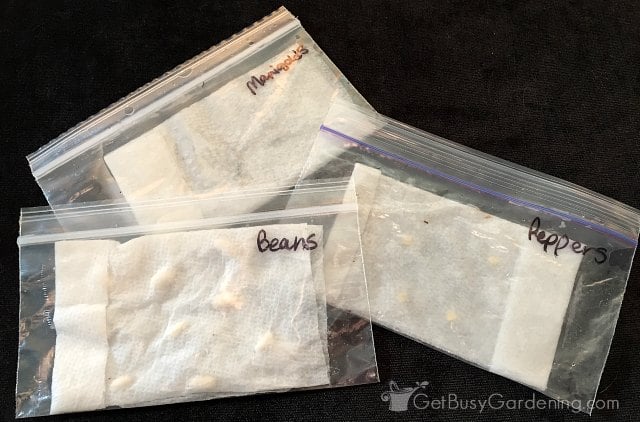
Stack two pieces of paper towel sheets (un- bleached) on top of each other. Once you have done this, dampen the paper towel, if possible use a spray bottle to achieve this step but if not, lightly drip water onto the paper towels. Its important to note that too much water will effectively drown the seeds so keep a keen eye on how much water is in the paper towels. Place your seeds onto the paper towels, leaving a centimetre or two between each seed to avoid overcrowding the space.

Image result for paper towel for germinating seeds


STEP 2:

Dampen another two paper towels and place them over the original paper towels that are holding your seedlings. Once you have done this, place your seedlings in a zip lock back. Do not seal the bag off as that will cut off all oxygen to the seedlings themselves.  Place the zip lock bag between two plates; one as the base and the other should be flipped upside down and placed on top of the base plate, this creates a dome in which the seeds can sit in. At this stage, Light is not important, in fact light will actually stunt or even stop your seedling from hatching out as root exposure to light is detrimental to plant growth. Place your seedlings in a warm and dark place. Anywhere from 21 – 24 degrees celcius is ideal. If you happen to live in places where temperatures are very low, buying a heat mat will help you out tremendously with this problem.

Image result for paper towel for germinating seedsImage result for paper towel for germinating seeds plaste dome


STEP 3:

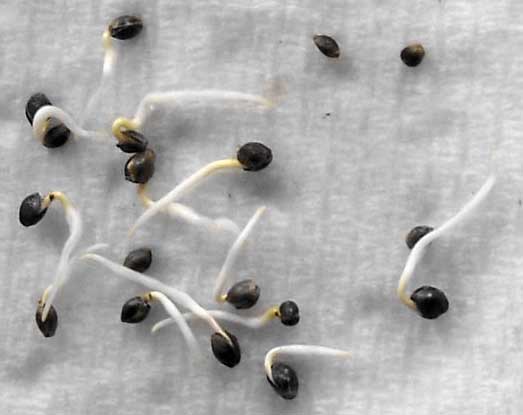
Once we have found a nice spot for our seeds all we need to do is maintain their environment. Check back every 6 hours to ensure the paper towels haven’t dried out, if you feel that they are, light spray the paper towels and place them back in the zip lock bag. It is also important to monitor temperatures within the germination environment. Temperatures getting to low or high will kill or stunt your seedling.  Keep a close eye on your seedlings until they show their first roots.

Image result for paper towel for germinating seeds